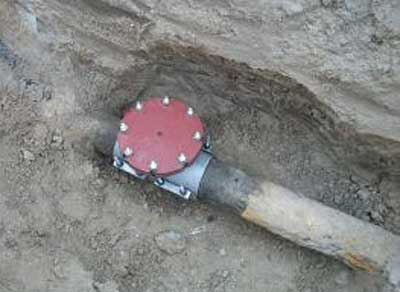
Line Stopping Fitting Installation
Water Line Stopping
Line stopping is the method of making a temporary "point shut-down" to existing main water without interrupting service on that pipe.
The primary alternative to a line stop is to use the existing valve infrastructure to shut down the water main which generally results in a far larger section of infrastructure to be taken out of service.
Depending on the specific needs and existing infrastructure of each installation, line stops may be performed individually, in conjunction with existing valve infrastructure or multiple line stops may be deployed simultaneously.
(It is very common to have a "dual line stop" - where a line stop is placed on each side of the area of the main that needs to be isolated.)
Mickie Service Advantage
- Same day or next day service - guaranteed (on standard size line stops).
- Large on hand inventory of line stop fittings - to enable a quick resolution/successful installation if existing pipe type/size are different than planned.
- Full time PM and office staff to assist with proper design of the overall solution and to ensure that all aspects of the service, not just the line stop itself, are effectively managed.
- Extensive knowledge of local specs and procedures and long standing relationships with inspection teams.
- Highly trained, experienced installation technicians.
- Real-time job/installation checklists are generated and provided to our customer at the end of every job (these checklists are stored permanently by MSC, in case there is ever a question about work performed).
Line Stopping Services
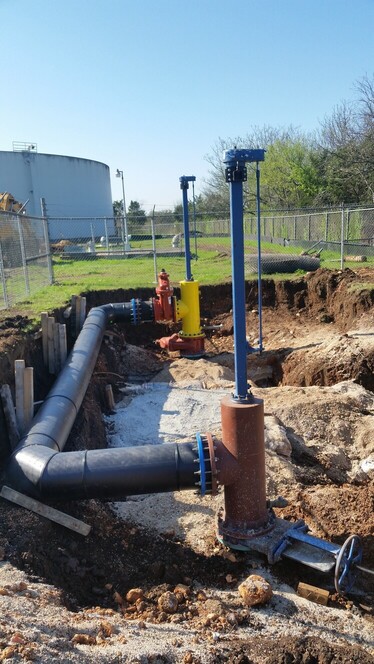
For municipal pipeline stopping services, Mickie Service Company is the leading provider in the Gulf Coast region. Our line stopping services (also called line stop) provides a temporary shut-off of an existing water main.
Line stops can be “single” when flow is in a single direction or “double” for a grid, bi-directional flow situation. The line stops enable “point shut-down” of a main with dramatically reduced water loss, service interruption, and damage to infrastructure resulting from water main de-pressurization.
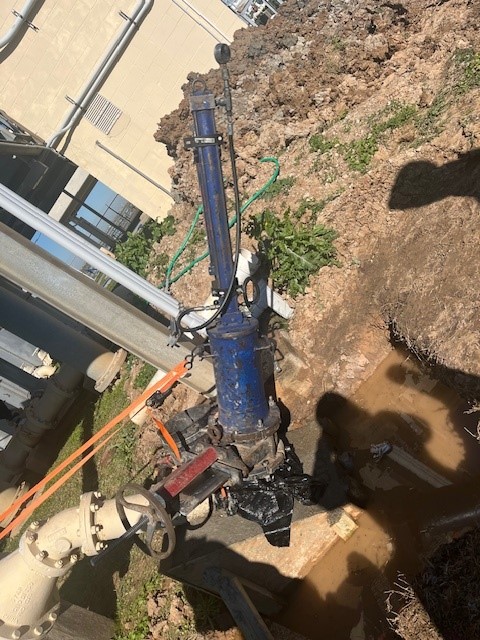
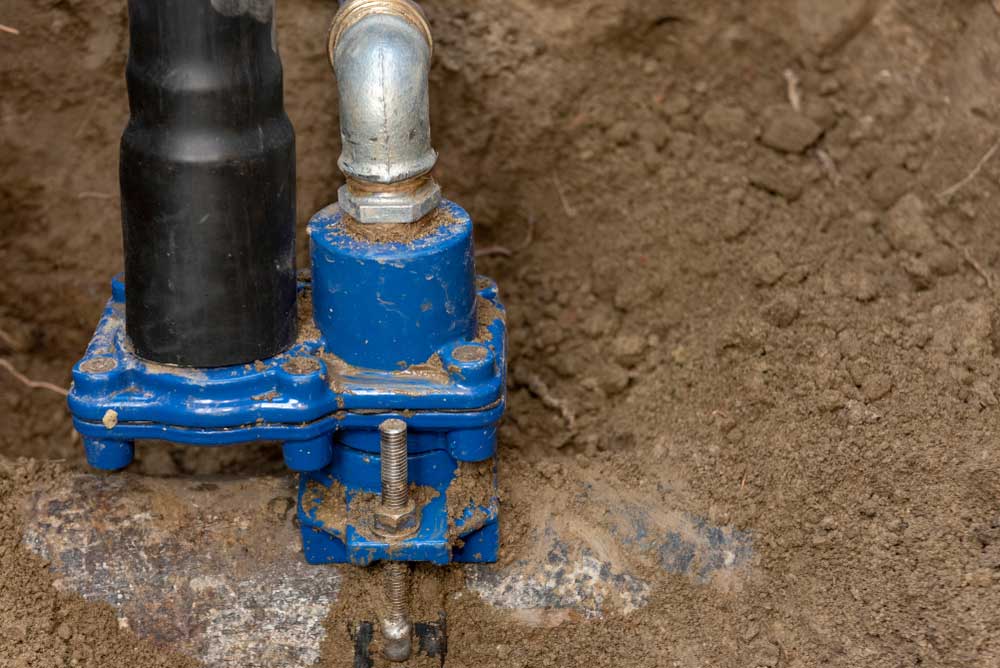
A line stop is performed while the existing main is under pressure. A size-on-size tap is made on the top of the main and a rubber plug or stopper is inserted into the line. The plug is then pumped into the main using a hydraulic ram (the main is supported by the line stop sleeve) which shuts off the water flow. After performing the necessary service, the stop is removed, and a blind flange is installed on the sleeve.
Line stopping is the preferred approach when the shut-off required is temporary (less than 3 days). We stock line stock fittings 4"-60" in all standard sizes, minimizing customer delay resulting from underground pipe uncertainty.
We offer a variety of different line stopping solutions to ensure that we have the right solution for each job. Our line stopping solution:
There are other commonly used names for line stopping - including line plugging and stoppling
More About Line Stopping
Advantages of Line Stopping
-
Reduces scheduling variability (no need to coordinate the authorities on water main shutdown, which can often take multiple attempts)
-
Reduces risk of water main contamination
Reduces crew service time and off-peak hours scheduling -
Saves time and costs, from start to finish
Mickie Service Advantage
- Same day or next day service - guaranteed (on standard size line stops)
- Large on hand inventory of line stop fittings - to enable a quick resolution/successful installation if existing pipe type/size are different than planned
- Full time PM and office staff to assist with proper design of the overall solution and to ensure that all aspects of the service, not just the line stop itself, are effectively managed
- Extensive knowledge of local specs and procedures and long standing relationships with inspection teams
- Highly trained, experienced installation technicians
- Real-time job/installation checklists are generated and provided to our customer at the end of every job (these checklists are stored permanently by MSC, in case there is ever a question about work performed)
Line Stopping Capabilities
Temperatures: up to 200 degrees Fahrenheit.
Water main materials: PVC / C900, Ductile Iron, Cast Iron, Asbestos, Cement (AC), Steel, Gifford-Hill Concrete (see Concrete Steel Cylinder), HDPE
Pipe Content: Water
Sanitary Sewer: Storm Sewer
Line Stop size: 2"-60"
Line Stopping Service Areas
Our primary service area for municipal and commercial line stopping (12" and smaller) is the greater Houston area. For larger diameter and mechanical projects outside this area - please contact us and we will work with you to determine if our solutions are right for your work.
Pipe Diameter Capabilities
| 2 inch | 12 inch | 22 inch | 32 inch | 42 inch | 52 inch |
| 4 inch | 14 inch | 24 inch | 34 inch | 44 inch | 54 inch |
| 6 inch | 16 inch | 26 inch | 36 inch | 46 inch | 56 inch |
| 8 inch | 18 inch | 28 inch | 38 inch | 48 inch | 58 inch |
| 10 inch | 20 inch | 30 inch | 40 inch | 50 inch | 60 inch |
Pipeline Plugging Services
For municipal pipeline stopping services, Mickie Service Company is the leading provider in the Gulf Coast region. Our line stopping services (also called line stop) provides a temporary shut-off of an existing water main.
Line stops can be “single” when flow is in a single direction or “double” for a grid, bi-directional flow situation. The line stops enable “point shut-down” of a main with dramatically reduced water loss, service interruption, and damage to infrastructure resulting from water main de-pressurization.
A line stop is performed while the existing main is under pressure. A size-on-size tap is made on the top of the main and a rubber plug or stopper is inserted into the line. The plug is then pumped into the main using a hydraulic ram (the main is supported by the line stop sleeve) which shuts off the water flow. After performing the necessary service, the stop is removed, and a blind flange is installed on the sleeve.
Line stopping is the preferred approach when the shut-off required is temporary (less than 3 days). We stock line stock fittings 4"-60" in all standard sizes, minimizing customer delay resulting from underground pipe uncertainty.
How Does the Line Stopping Process Work?
Water Line Stopping Procedure and Process
If you are in need of a permanent valve solution, we offer municipal insertion valve service, as well. Mickie Service Company’s Line Stopping significantly reduces or eliminates overtime costs, and decreases repair and routine maintenance time.
1. nstall water line stop fitting
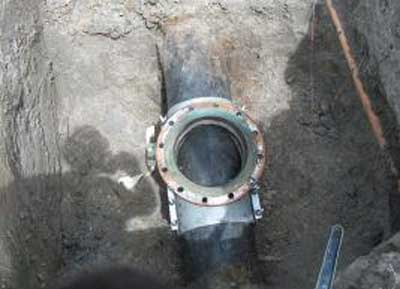
2. Make tap on water main
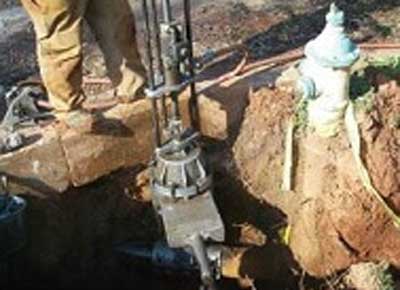
3. Insert line stopping plug in housing
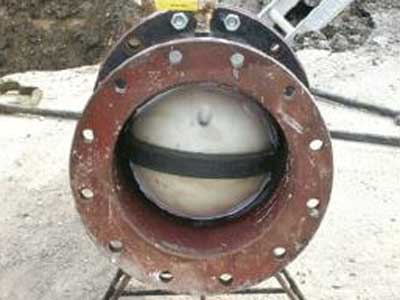
4. Mount and activate line stopping equipment
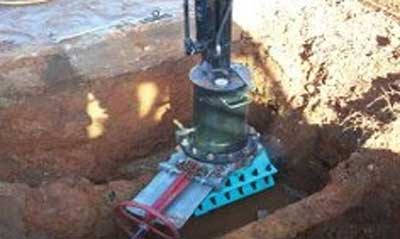
5. Perform required service and installation
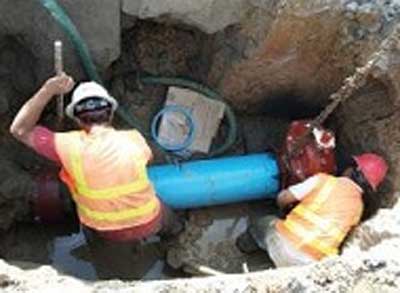
6. Remove line stopping equipment and install blind flange