


Site Utilities
Storm and Sanitary Sewer Installations
Mickie Service Co., Inc. specializes in connecting private storm and sanitary sewer systems to existing public infrastructure across the Greater Houston area. Our work centers on connecting private storm and sanitary systems to municipal mains, with careful attention to permitting, constructability, and long-term system performance.
Our crews are licensed and experienced in both gravity-fed sewer systems and force main applications. Each project is approached with a clear understanding of local requirements, subsurface conditions, and inspection standards, allowing work to progress efficiently from planning through final approval.
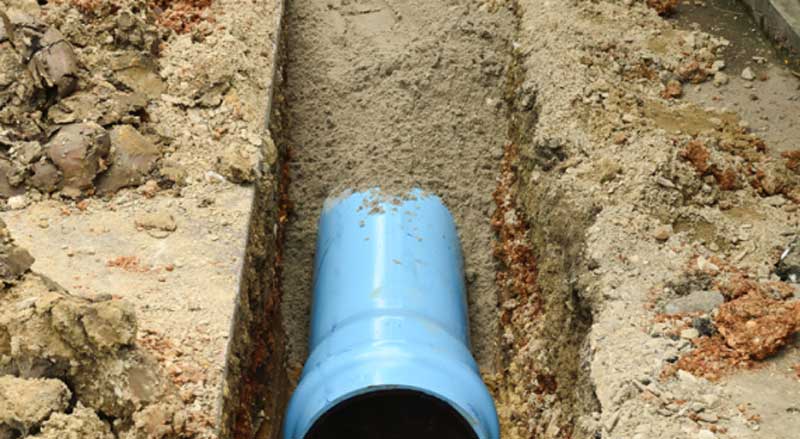
Our Storm Sewer and Sanitary Installation Services
Our storm sewer line installation services and sanitary sewer line installation capabilities support a wide range of site conditions and project scopes, including commercial developments, industrial facilities, and residential communities.
Services include:
- Comprehensive permitting support and coordination with local authorities
- Turnkey installation covering excavation, backfill, and service line placement
- Lift station installation to support sites with elevation or flow constraints
- Sewer taps and manhole installation for proper access and system integration
- Street removal and restoration when public rights-of-way are affected
- Management of required testing and inspection processes
Our storm sewer line installation services are often integrated with broader site utility scopes, helping reduce scheduling friction and field coordination issues.
Mickie Service Advantage
Clients rely on Mickie Service because projects are managed with a practical understanding of municipal processes and field realities. Our advantage is rooted in hands-on experience and disciplined execution.
- Highly experienced crews with deep utility construction expertise
- Proven safety practices supported by a strong safety record
- Dedicated project management and field supervision throughout construction
- Full-time permitting management with detailed knowledge of approval workflows and common challenges
- Collaborative coordination with engineers and inspectors when design or installation adjustments are required
- Structured pre-job construction reviews that align expectations before work begins
- Established relationships with inspectors and long-standing manhole partners
This allows projects to move forward with clarity and consistency, even in complex municipal environments.
Sanitary Sewer and Water Meter Service Areas
Mickie Service provides sanitary sewer line installation across Greater Houston municipalities that do not self-perform this work. We also support water meter installation for MUD and district operators.
Meter installation services are performed directly for the MUD or district operator and are not contracted through general contractors or private developers. This structure helps ensure proper coordination, accountability, and compliance with governing authorities.
Let’s Get Your Sewer Connection Approved and Installed
Our storm and sanitary sewer services build on core expertise developed through decades of water main tapping and underground utility work. In addition to sewer installations, we also support line stops, insertion valves, and private fire line installation as part of integrated site utility solutions.
If your project requires experienced coordination with public infrastructure and permitting authorities, Mickie Service is ready to help you move forward.
Frequently Asked Questions About Storm and Sanitary Sewer Installation
A storm sewer manages rainwater and runoff, while a sanitary sewer carries wastewater from buildings to treatment facilities. Each system follows different design standards, permitting rules, and inspection requirements, which is why they are installed and approved separately.
Sewer lines can be installed in paved areas when necessary, but the process often involves traffic control planning, saw cutting, pavement removal, and surface restoration. Coordination with local agencies is usually required before work begins.
Project timelines are influenced by permitting review periods, soil conditions, depth of installation, inspection scheduling, and weather. Early coordination with municipalities and inspectors often helps reduce delays.